Recovery and training status test
In a previous post, we covered the critical power test. The second test I recommend is a Training Status Test. The Training Status Test is mentally and physically easier than the critical power test, and it helps you track trends and development in your training. As the name clearly suggests, it is a test that shows your current training condition. It takes into account power, heart rate, RPE (CR100), and heart rate drop after completing the session. The test is short (16:30 minutes), can be repeated frequently, and can be used, for example, as a warm-up before your regular training session once or a couple of times a month.
A simple test that you can perform on your own by bike to measure recovery and performance status.
What you want to do is take a lap time on your bike computer/training watch after 1, 6, 7, 12, 13, and 15 minutes. The reason for this is that you do not want to include the first minute of each intensity level, as that minute is used to raise your heart rate, as shown in the image below.

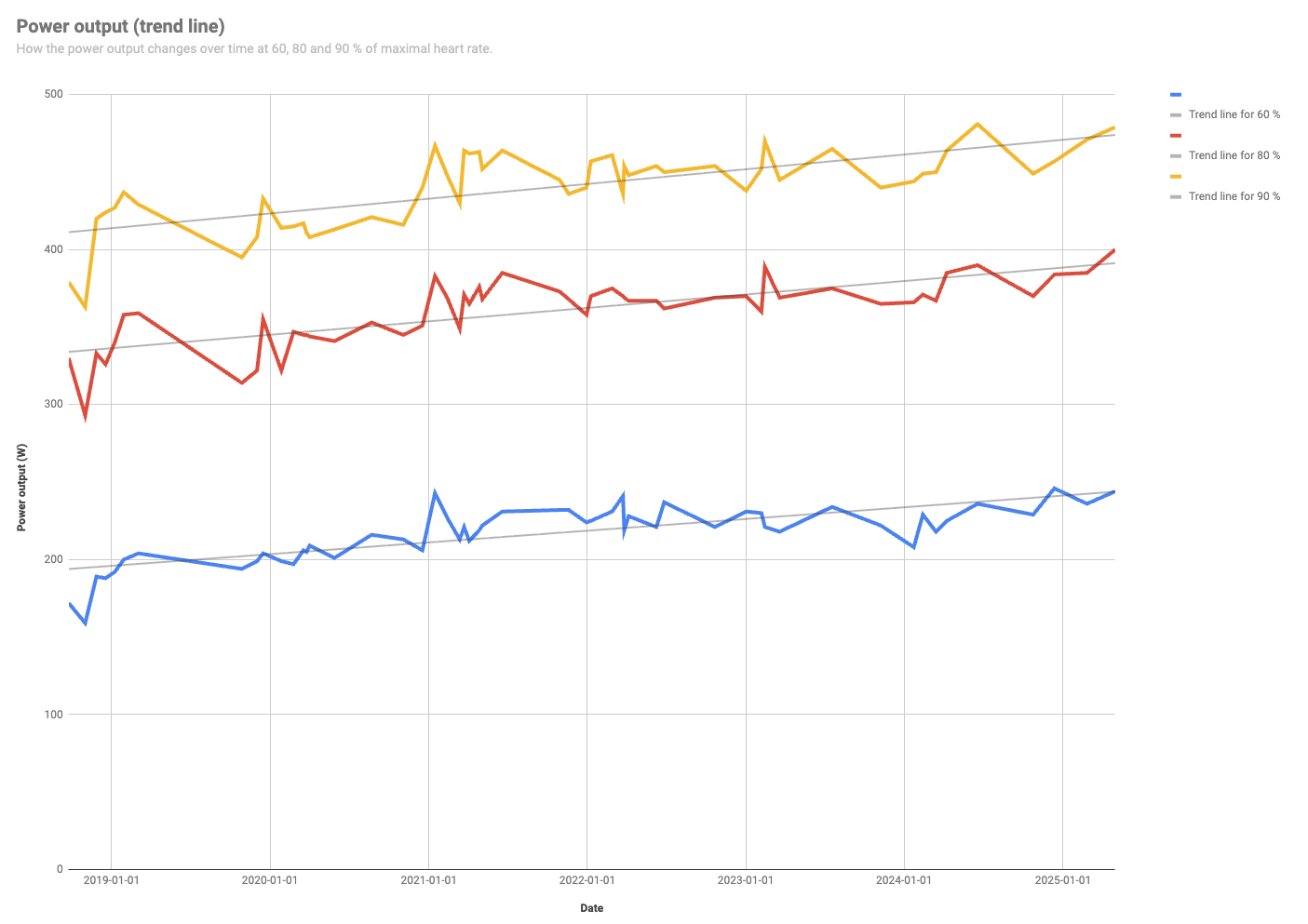
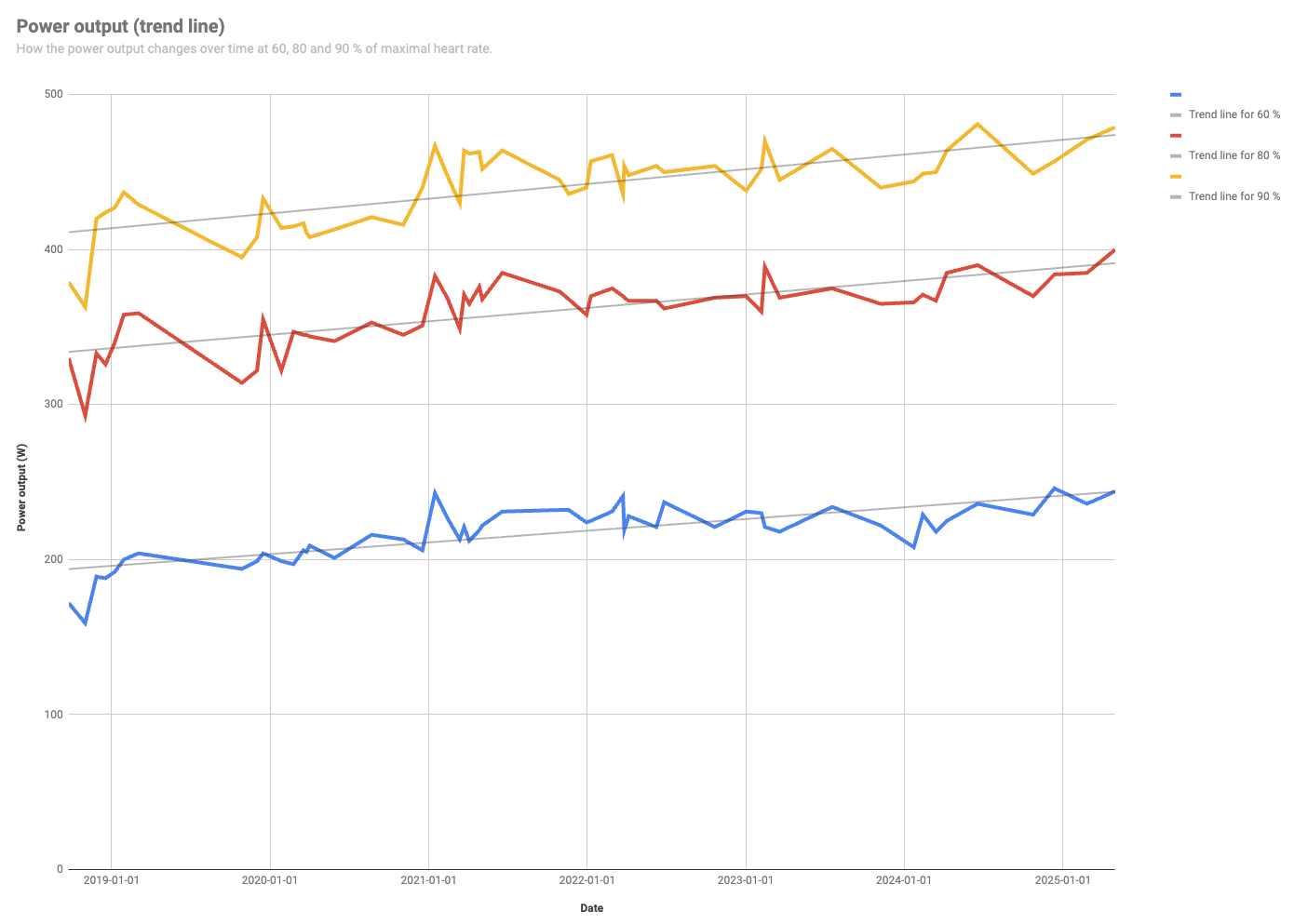
It should be standardized as much as possible with room temperature, a calibrated power meter, and the same heart rate strap that you always use. In D-VELO-P’s analysis sheet, all data is collected, and after many completed tests, trend lines for the different workload levels are followed so that you can see that the time you invest in training truly yields results and does not deteriorate your performance. Of course, a test might show worse results on one or more data points than the previous test, but this should only be noted without overthinking it. However, if there is a consistent downward trend test after test, it’s worth reflecting on why that is and considering possible changes in your training.
The image below shows the trend line of power development at 60%, 80%, and 90% levels over 4 years. As you can see, each test occasion has varied up and down (the colored lines), but the important thing here is that the gray trend lines steadily move upward.