
The unseen advantage: MTB XCE World Champion Edvin Lindh on Coaches, Confidence and the Joy of Suffering
The hidden power of outside input
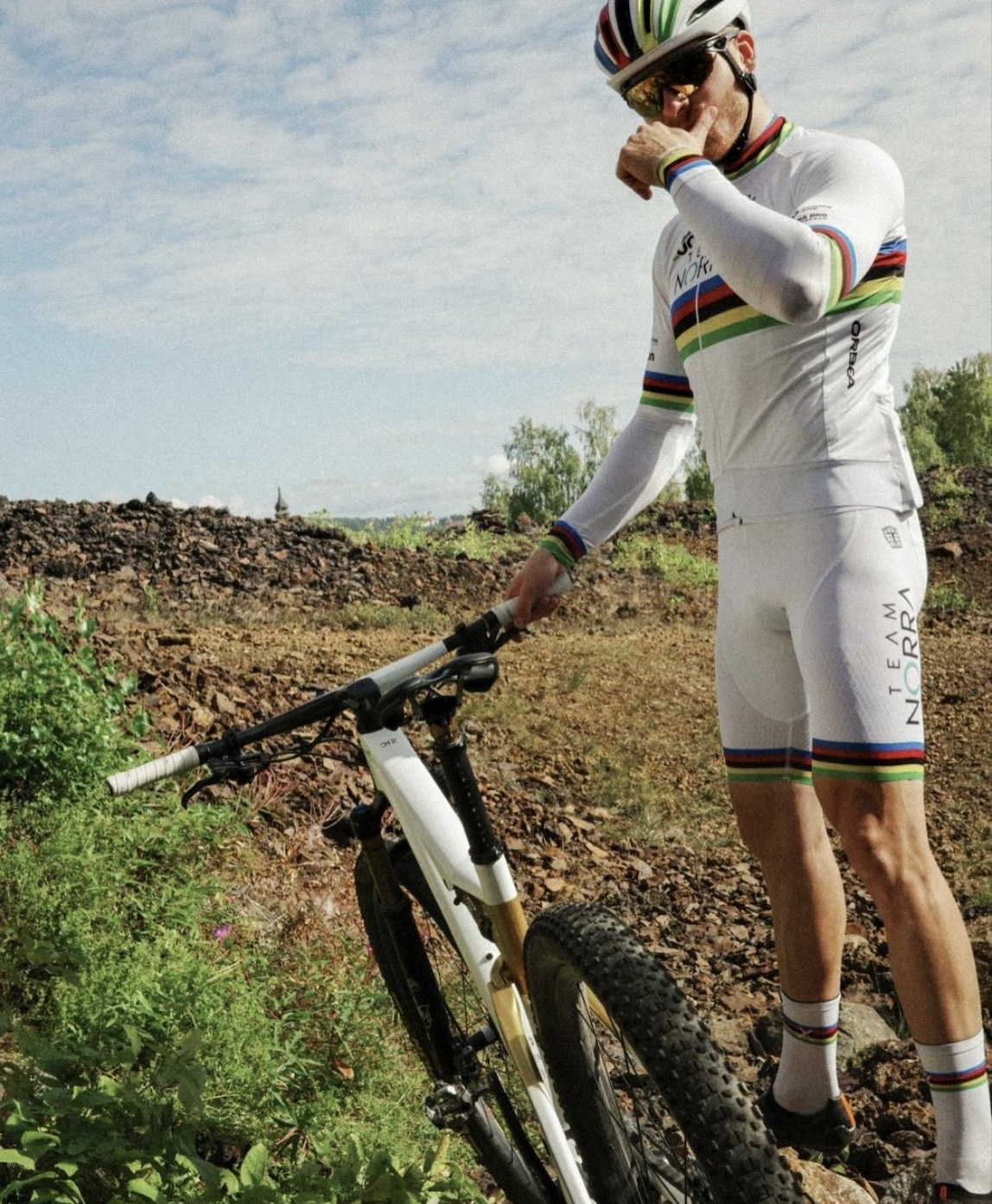
Photo: Jakob Söderqvist
World Champion cross-country Eliminator cyclist Edvin Lindh is not just a master of speed and power; he’s a student of the mental game. In a recent interview in the D-VELO-P cycling training podcast, Lindh dives deep into the non-physical elements that have been critical to his elite career, from the role of a coach to the philosophy that keeps him going.
D-VELO-P cycling training podcast
Lindh is clear: the greatest benefit of a coach isn’t just a perfect training plan, it’s the outside perspective and accountability. “Having a coach is so much more than just having knowledge of training physiology and training plans… it’s having someone to bounce ideas with, to talk about motivations and... how training interacts with life in general.”
He admits that even as a highly knowledgeable athlete and practicing coach himself, going without a coach led to his training “just going down.” Being self-coached creates a tunnel vision that makes it “almost impossible to be objective with your own thoughts.” Here, co-host of the podcast and prior elite cyclist Fredrik Ericsson adds that his biggest regret is being self-coached for his whole career despite being a practicing coach for most of his athletic career as well.
The Most Critical Coaching Moment
The value of this external push was never more evident than at the World Championships. Facing uncertainty about his race strategy, his manager and national team coach, Jakub Sarota, gave him a direct, confidence-boosting command: “You’re the strongest guy here. You’re gonna push from front.”
Lindh calls this input “instrumental,” providing the critical confidence needed to perform. He believes this on-the-spot support was effective largely because of the “mental game” work he and his coach at home, Adrian Hörnqvist, had already put in, preparing him to handle the intense stress and nervousness between the morning qualifiers and the afternoon finals.
Lindh suggests that for him personally, a “hint of authoritarianism” in coaching is helpful—someone who can say, “Hey, you’re doing this. Go out there and get it done,” to overcome the mental hurdles of daily, isolated training.
Lindh’s Three Pillars: Joy, Progression, and Continuity
Edvin Lindh’s overarching philosophy for his athletic career boils down to three guiding principles:
Joy: At the core, cycling and moving the body must be fun. “If you’re having fun once you’re riding, progression and continuity is gonna stem from that.”
Progression: The rewarding feeling of “becoming a better version of myself” is what makes the demanding process worthwhile. Competition, in this sense, is simply receiving a “receipt” that confirms his competence.
Continuity: This is the practical application. Anyone can train for a year, but long-term success requires a sustained, consistent effort. Lindh applies this to his coaching, arguing that a lower, sustainable training load (e.g., 15 hours a week) with great continuity is always better than a high load (20 hours a week) followed by burnout and forced rest.
The Resilience of the North
While he trains in Falun, Sweden, Lindh’s upbringing in northern Sweden (Härnösand), where there is “snow for 7 months of the year,” has shaped his mental toughness. He sees the miserable conditions as a psychological advantage. ”If you’ve spent 25 years cycling in Sweden and knowing how cold and miserable it can be at times... Actually, becoming resilient is a bit more difficult to achieve when everything is perfect all the time.”
This love for “the contrast”—the long, dark winter making the summer ride sweeter—instills a resilience that ensures he’s always ready to ride, regardless of the environment.
Confidence is King
Finally, Lindh emphasizes that in a contact-driven sport like Cross-country Eliminator, confidence is paramount. The strength he builds in the gym—where he’s capable of a 140 kg (309 lb) bench press and a 225 kg (496 lb) deadlift—isn’t just for power output; it’s a foundation for mental confidence.
This feeling of general athletic competence translates to the bike, giving him the mental space to assert himself: “It’s not just about getting a broad shoulders; it’s getting a broad space that you take it... mentally as well.”
For Lindh, a winning concept is simple: “If you always feel like you’re the best, and that’s a sure fire way to be confident. And if you had a lot of fun on the on route to that race as well. [You’re a] winner.”