
Maximizing the oxygen saturation - to be able to train with higher intense?
Do you often feel heaviness in your legs and muscular fatigue before your heart rate has had a chance to rise, or before your central system (heart/lungs) becomes exhausted? This is common when the heart pumps powerfully and the blood flows "too fast" to carry the maximum number of oxygen molecules to the working muscles. This also means that the blood, which is supposed to transport carbon dioxide and other waste products away from the muscles, is limited in its capacity to do so.
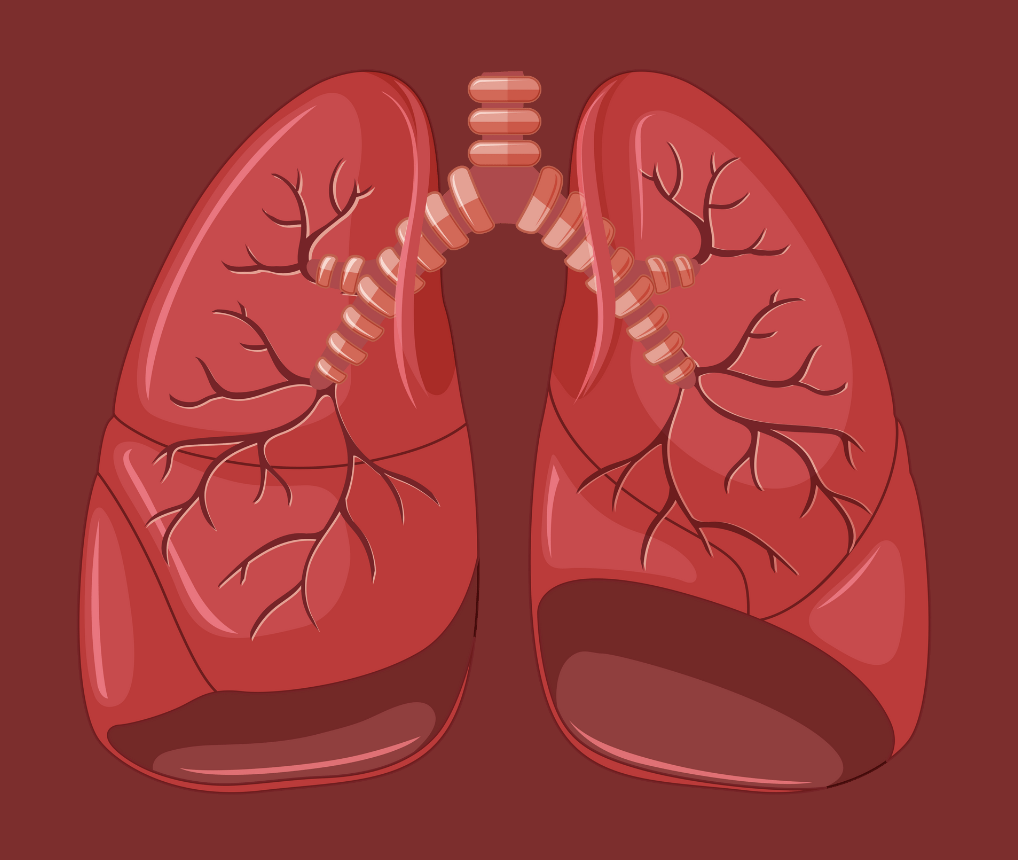
Exercise-induced arterial hypoxemia (EIAH) is a fairly common condition among young, well-trained athletes with large heart muscles. The prevalence of EIAH at sea level has been estimated to be about 50% in very well-trained young (male) adults.
Exercise-induced arterial hypoxemia (EIAH) is a fairly common condition among young, well-trained athletes who have large heart muscles. The prevalence of EIAH at sea level has been estimated to be about 50% in very well-trained young (male) adults. It is important to mention that this is at sea level, as barometric pressure can somewhat influence the development of EIAH (Dominelli & Sheel, 2019). However, this is only an estimate, so the actual number could be significantly higher or lower. The main point is to demonstrate that it is a common occurrence.
Abbreviations in this post:
PO2 is the partial pressure of oxygen (O2) in the blood. PO2 (partial pressure of oxygen) and PCO2 (partial pressure of carbon dioxide) are measured to determine the oxygen and carbon dioxide levels in the blood.
The oxygen saturation in the artery (SaO2 - Arterial O2 saturation) is the most important abbreviation to remember in this post.
Arterial PO2, the partial pressure of oxygen in the blood within the arteries (PaO2), is determined by the level of ventilation in the alveoli (regardless of the metabolic load the system is subjected to) as well as the efficiency of oxygen exchange between gas in the alveoli and blood in the arteries. This is simply called the alveolar-arterial PO2 difference (A-aDO2). Simple, right?
The level of oxygenation in arterial blood during exercise is shown through measurements of PO2, HbO2 saturation, and oxygen (O2) content. HbO2 = hemoglobin level in oxygen. CaO2 means the amount of oxygen in the arteries. C = content, a = arterial, O2 = oxygen.
What is EIAH?
EIAH (Exercise-Induced Arterial Hypoxemia) is a condition characterized by an unusually low level of oxygen saturation in the arterial blood. Normally, arterial blood oxygen saturation is around 98% at rest, which may decrease slightly during physical activity, especially intense exercise, but typically remains between 95% and 98% (Dempsey & Wagner, 1999). A small drop during strenuous activity is common due to changes in pH and body temperature.
With 95-98% oxygen saturation, oxygen transport between the lungs and active muscles is optimized. EIAH is considered a harmless condition where there is a lower oxygen level in the arterial blood being transported from the lungs to working muscles.
EIAH is classified into different severity levels:
Mild: 93-95% SaO2
Moderate: 88-93% SaO2
Extreme: below 88% SaO2 (Dempsey & Wagner, 1999).
Moderate and extreme EIAH observed in well-trained athletes is comparable to the oxygen saturation limitations seen in untrained individuals exposed to high-altitude training, where oxygen saturation does not reach its maximum (Dominelli & Sheel, 2019).
EIAH often peaks during or near VO2MAX exercise intensity, but a drop in SaO2 can be seen even at relatively low exercise loads. This happens because the alveolar-arterial oxygen pressure difference (A-aDO2) widens considerably without adequate compensation from alveolar hyperventilation. As exercise intensity increases, arterial oxygen pressure (PaO2) and saturation (SaO2) continue to fall while A-aDO2 widens further. The compensatory hyperventilation and respiratory rate are insufficient, leading to metabolic acidosis.
An example of this:
Low intensity: Moderate intensity: High intensity:
Load: 200W Load: 330W Load: 420W
Heart rate: 100-105 BPM Heart rate: 135 - 140 BPM Heart rate: 170+ BPM
SA02: 96 % SA02: 91 % SA02: 88 %
Studies show that there is usually a significant decrease in PaO2 when sub maximal work exceeds 65% of VO2MAX, which is clearly seen in the example above, where moderate and high-intensity work occurs above 65% VO2MAX. The example comes from three different workloads during training with a finger SPO2 meter from Beurer measuring blood oxygen saturation (see image below). At these times, you can see that SpO2 was on the borderline of "extreme" EIAH (Exercise-Induced Arterial Hypoxemia) during high-intensity training, which can be simply explained by the fact that at work in zone 5 and above, there is insufficient time to maximize oxygen transport to the working muscles, causing them to fatigue faster than normal.
As stated in the introduction, this phenomenon is quite common among younger, well-trained men. Why is that? One hypothesis is that they have trained cardiovascular and metabolic adaptations to maximize oxygen transport and VO2MAX but have not trained their lungs and airway flow channels to the same extent. Many of the mechanical limitations of ventilation (VE) appear to stem from airflow channels that have an upper limit to flow volume, especially during exhalation. In other words, the blood outflow carrying carbon dioxide and other waste products from working muscles does not occur as effectively as mechanically possible.
Another potential mechanical limitation to ventilation (VE) is that the pressure generated by the inspiratory muscles may only reach around 90% of their full capacity during maximal exercise in well-trained individuals.

One SP02 measuring device you put on the finger.
The size of the heart affects stroke volume (how much blood is pumped out with each heartbeat). The amount of blood pumped out with each beat is large, and when it forcefully passes through the lungs where it should absorb oxygen molecules, it flows faster than the oxygen molecules can attach. Hence the low percentage of oxygen when measuring SPO2.
Something mentioned in the research article is something we have personally experienced and thought a lot about, and that is breathing and the lack of high-ventilation work in athletes.
Several subjects with EIAH will underventilate during even mild and moderate exercise intensity, i.e., in the absence of significant flow limitation or of high loads on respiratory muscles.
Here they state that even when there is no limitation of blood flow, or when there is no need to ventilate heavily at high exercise loads, people with EIAH still "underventilate."
It is very rare (if ever) that people experiencing severe EIAH need to hyperventilate during high-intensity training. It’s as if the oxygen to the working legs gets cut off before they even reach a “hyperventilatory” level. However, this is something we´ve known and has been training over the past couple of myears. Partly by becoming more aware of our athletes breathing, breathing frequency, and also the power of their exhalation.
We experience (which could, of course, be a placebo effect) that our athletes perform significantly better during high-intensity sessions than before when they consciously think about and focus on the breathing. As we began this paragraph, some athletes very likely underventilate even during low to moderate effort training. We believe this is where athletes can gain the most by making their exhalation "power" more efficient.
Improving breathing at the base of all training, the low-intensity work, very likely enhances it at intensities closer to maximal efforts as well.
How do you train this?
Aside from becoming more aware of the problem, one can use an Expand-a-Lung, or Isocapnic, or other devices available on the market twice a day. With it, you breathe powerfully through about 20-30 breaths in the morning and 20-30 breaths in the evening. What’s good about this devices is that you can adjust resistance for both inhalation and exhalation, making it feel like you’re trying to breathe through a pillow. Not much air passes through, so you need to breathe in and out very forcefully, which is quite challenging even with low resistance.
This is done at home, when you are not training. You can also try using it during low-intensity endurance or recovery rides, but you should have built up endurance to it beforehand by using it while resting. It can be quite challenging.
According to the research article by Dempsey & Wagner (1999), ventilation accounts for just over 60% of the variation in SaO2, VO2MAX about 25%, and A-aDO2 the remaining 15%. If approximately 60% of the potential problems with Exercise-Induced Arterial Hypoxemia (EIAH) can be alleviated by improving and optimizing your breathing and ventilation, it seems like a straightforward and essential area to train and apply tools for improvement.
Eliminating EIAH and restoring CaO2 to a "normal state" has been shown to reduce fatigue in working muscles and the diaphragm, which is the muscle used for breathing. This contributes to enhanced performance at both sub maximal and maximal levels through an increased and more efficient oxygen transport system to the working muscles (Dominelli & Sheel, 2019).
References:
Dempsey & Wagner (1999). Open Access.
Dominelli & Sheel (2019). Not Open Access. (PDF can be provided upon request.)